Aslak Krongli
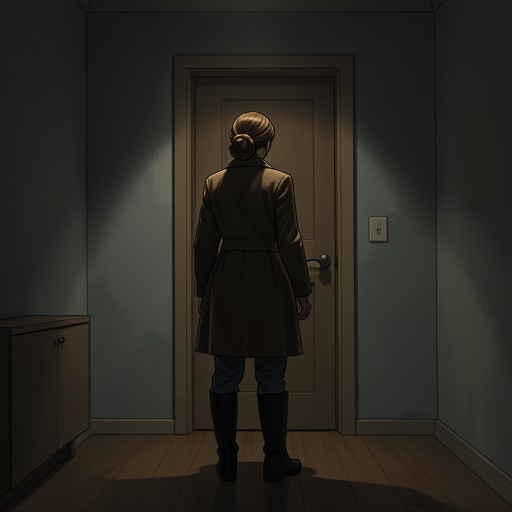
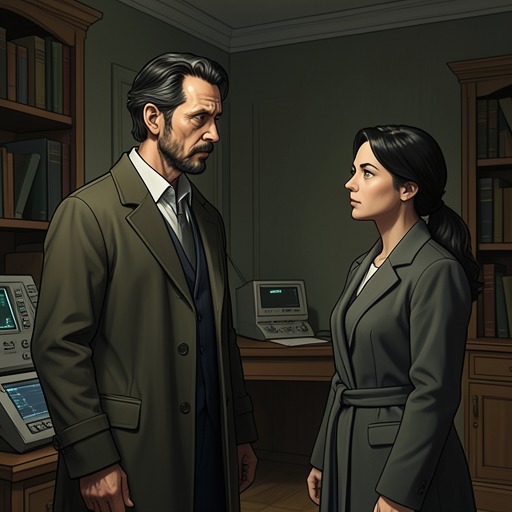
The Leopard (Jo Nesbø Edition)Aslak Krongli, the village policeman in Ustaoset, first appears as a genial local guide to Kaja Solness and later becomes a troubling figure in the investigation surrounding the Hävasshütte. He knows the mountain region and its people, but that familiarity also gives him access to information that may connect him to the crimes. The evidence turns him from a helpful contact into a suspect without conclusively establishing what he has done.
Identity and Introduction
Krongli meets Kaja at the Ustaoset station, where he steps out of a waiting vehicle and approaches her with a confident, springing gait, a broad smile, and an outstretched hand. With the low winter sun behind him, she initially freezes: his appearance recalls Even. He introduces himself as the local policeman and takes her skis without asking before explaining that he cannot go with her to the Hävasshütte. An avalanche has blocked a tunnel, and he must help redirect traffic.
Rather than leave Kaja to make her own arrangements, Krongli has persuaded the hut’s supervisor, Odd Utmo, to drive her there. Kaja welcomes this solution partly because it spares her from explaining why police from Oslo are suddenly interested in a missing-person case from Drammen. Krongli’s first role is therefore both practical and discreet: he facilitates her journey while allowing her to preserve the purpose of her visit.
His manner is marked by an open enthusiasm for the forces of nature. After Kaja returns from the hut, he expresses relief that she got back before the heavy snowfall, which might otherwise have trapped her there for days, and admires the scene outside the hotel restaurant’s panoramic windows. Kaja finds this enthusiasm familiar because it recalls Even’s willingness to admire nature even when it turns against him. Krongli’s pleasure in the weather is a personal impression, not proof of innocence or malice, but it contributes to the contrast between his buoyant manner and the danger gathering in the mountains.
Local Knowledge and the Mountain Investigation
Krongli’s knowledge of the area includes its residents and their histories. In conversation about Utmo’s rifle and damaged eye, he recounts the local account of the disappearance of Utmo’s fifteen-year-old son and, shortly afterward, his wife, eighteen years earlier. A shoe was found beside an avalanche, but the boy’s body was never recovered when the snow melted. Krongli presents the explanations as unresolved village talk: some people mentioned a bear, although he knew of no bears in the area at the time, while others suspected Utmo himself. The story establishes Krongli as a conduit for local memory, while also showing how little the community can establish about what happened in the isolated mountains.
That local role becomes more consequential when Krongli later reviews the guestbooks of the self-service huts. He reports that Charlotte Lolles and Iska Peller had listed the Hävasshütte as their next destination after staying at Tunvegghütte. He also passes on an account from an older couple who stayed at Tunvegghütte on the same night: a man arrived, ate briefly, changed his shirt, and continued southwest, in the direction of the Hävasshütte. The couple barely saw him, but remembered that he kept his cap and old-fashioned slalom goggles on even while changing, as if he did not want to be recognized. The woman wondered whether he had been badly disfigured in an accident. Krongli supplies the investigative lead; the witnesses’ limited view leaves the traveler’s identity uncertain.
Krongli also has a personal approach to Kaja beyond his official assistance. While they are discussing the investigation in Oslo, he says he is staying at the Plaza and asks whether she would have dinner with him. He explains that he knows almost nobody in the city apart from his ex, whom he does not dare call. Kaja reads his expression easily and anticipates that she will regret the direction of the conversation. The invitation shows a social, somewhat awkward side to him, but the evidence does not establish a relationship between them.
From Helpful Contact to Suspect
A more disturbing account of the Hävasshütte night comes from Elias Skog, as relayed to Harry Hole. Elias had been woken by noises outside a bedroom window and saw a man and woman beneath the roof overhang of the outhouse. The woman faced him; the man stood behind her, concealing his face. Elias initially misread the scene as sexual activity and went back to sleep, disappointed that he had not seen more. After reading about the murders, he reconsidered: the woman may have been struggling to escape, and the hand over her mouth may have been intended to stop her calling for help. Harry asks Krongli whether he was there. The account gives rise to suspicion, but the available evidence records no answer that confirms Krongli’s presence or involvement.
The suspicion intensifies after an avalanche is set off near the investigation. Harry reasons that whoever caused it would need to know the terrain and the police operation. Krongli had been in contact with people at the Hävasshütte, and Elias’s account had made him seem like a possible sexual predator. Harry further argues that an attacker who knew a police officer and Iska Peller were supposedly at the hut would have reason to choose an avalanche as a way to strike and retreat. He describes the suspected attacker as an insider who knew the team’s theory and may have become alert when a witness was named at a press conference.
Kaja complicates that theory. Krongli received the Criminal Investigation Service’s urgent request for permission to land a police helicopter in the national park, so he may have recognized the connection. But, she argues, he should also have understood that Iska was not actually at the hut: the police would not expose a witness to that danger. His failure to stay away therefore seems odd if he believed she was there. Harry agrees that Krongli may never have thought Iska was present and suggests that the avalanche could instead continue something Krongli had already been doing. This remains an investigative interpretation, not a confession or a definitive identification of the person who caused the avalanche.
Later Developments and the Unresolved Case
Krongli remains involved as the search develops. Mikael Bellman reports that Krongli expects conditions in the search area to improve enough for dogs and a helicopter to be deployed. This places him in contact with the authorities even as Harry’s team considers whether information from within the investigation has reached a potential attacker. Krongli’s practical cooperation and his possible access to sensitive developments coexist uneasily; neither by itself settles the question of his culpability.
A later telephone call brings a concrete correction to the case. Krongli tells Harry that the body found beneath the crashed snow scooter is not Tony Leike’s but Odd Utmo’s. He identifies Utmo by the red flannel shirt he habitually wore and by his teeth, including a single decayed stump; the scooter also belonged to Utmo. The identification overturns the assumption that the body was Leike’s, but it does not resolve Krongli’s own status in the investigation. The evidence presented leaves him suspended between the helpful local officer who guides Kaja and reports what he learns, and the informed insider whom Harry has reason to suspect.